
For more than seven centuries, the House of Campbell has produced not only chiefs, lairds, and military leaders, but also some of Scotland's most distinguished peers. Through royal favor, military service, strategic marriages, and political leadership, several branches of Clan Campbell were elevated to the Peerage of Scotland and, later, the Peerage of the United Kingdom. Together, these noble houses shaped the history of Argyll, Perthshire, Ayrshire, and beyond, while extending Campbell influence throughout Scotland and the British Isles.
Although all descend from the ancient House of Lochawe, each peerage house developed its own identity, estates, and sphere of influence. Some became powerful regional magnates, while others played prominent roles in Parliament, the military, colonial administration, diplomacy, and the Royal Household. Today, these houses remain among the most historically significant branches of Clan Campbell.
The Four Peerage Houses
House of Argyll
The House of Argyll is the senior line of Clan Campbell and has been led by the Dukes of Argyll since 1701. Descended from the medieval Lords of Lochawe, the family rose to become Earls of Argyll in 1457 before being elevated to the dukedom at the beginning of the eighteenth century.
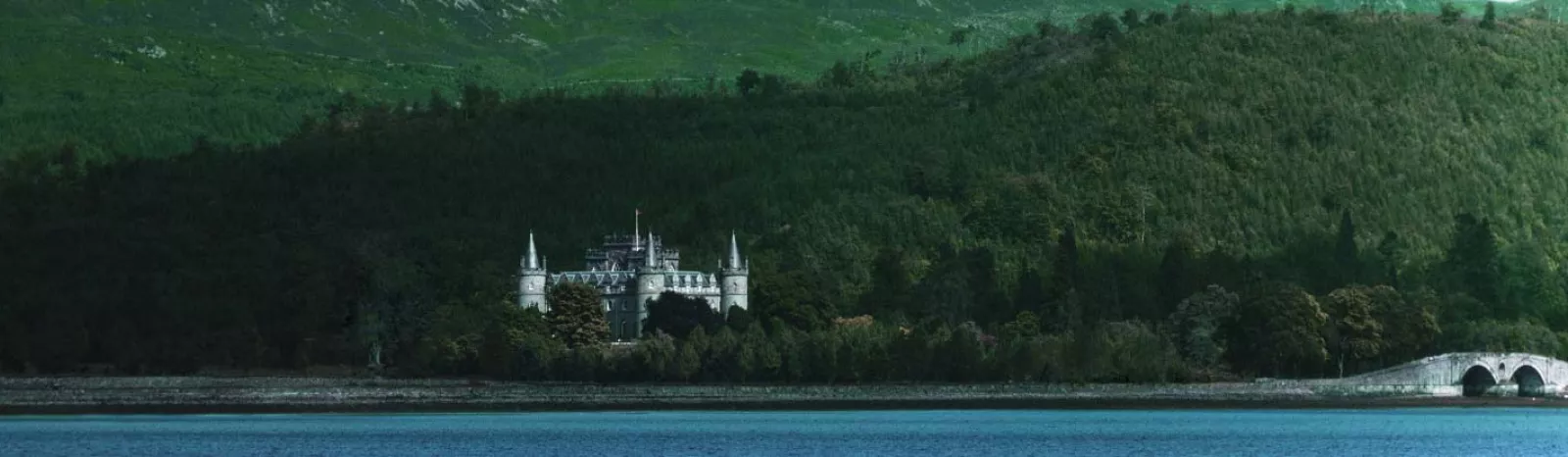
The Duke of Argyll is recognized by Scottish law as Chief of Clan Campbell, bearing the hereditary Gaelic title Mac Cailein Mòr ("Son of Colin the Great"). From their ancestral seat at Inveraray Castle, the Dukes have served Scotland as soldiers, statesmen, Privy Councillors, Governors, and members of the House of Lords. The present chief is His Grace Torquhil Ian Campbell, 13th Duke of Argyll, who succeeded in 2001.
House of Breadalbane
Earls of Breadalbane and Holland
The Breadalbane branch descends from Sir Duncan Campbell of Glenorchy, a younger son of Duncan Campbell, 1st Lord Campbell. From their seat at Balloch (later Taymouth Castle), the Glenorchy Campbells established one of the largest landed estates in Highland Scotland.
In 1681, Sir John Campbell of Glenorchy was created Earl of Breadalbane and Holland, recognizing both his political influence and extensive Highland holdings. For generations, the Earls of Breadalbane were among Scotland's wealthiest landowners and exercised considerable authority throughout Perthshire and the central Highlands. Their history includes involvement in the Jacobite period, Highland estate management, and nineteenth-century agricultural improvement.
House of Cawdor
The Campbells of Cawdor trace their origins to the marriage of Sir John Campbell of Calder to the heiress of Cawdor Castle in the early sixteenth century. Through this union, the Campbells inherited one of Scotland's most celebrated medieval castles and established a powerful branch in Nairnshire.
Created Baron Cawdor in 1796 and Earl Cawdor in 1827, the family has long combined Scottish and Welsh estates while serving in Parliament, the military, and public service. Cawdor Castle remains one of Scotland's best-known historic houses and continues to symbolize the enduring legacy of this Campbell peerage.
House of Loudoun
The Earldom of Loudoun entered the Campbell family through marriage when Sir Duncan Campbell of Lawers married Lady Jean Campbell, heiress of the Earls of Loudoun. Their descendants inherited both the earldom and extensive Ayrshire estates, uniting another historic Scottish title with the House of Campbell.
Members of the House of Loudoun served as soldiers, diplomats, colonial governors, and senior government officials. Among the most notable was John Campbell, 4th Earl of Loudoun, Commander-in-Chief of British forces in North America during the French and Indian War. The family has maintained its historic association with Loudoun Castle and the ancient Earldom of Loudoun for more than three centuries.
A Legacy of Leadership
While the Dukes of Argyll remain the hereditary Chiefs of Clan Campbell, the peerage houses together represent the remarkable breadth of Campbell influence. Each house reflects a different chapter in the clan's history—from medieval Highland expansion and royal service to parliamentary leadership, military command, and estate stewardship.
These families, together with the many cadet branches of Clan Campbell, illustrate how one Highland clan produced an extraordinary network of noble houses whose influence extended across Scotland and throughout the British Empire. Their stories continue to preserve the heritage, traditions, and historical legacy of Clan Campbell for future generations.
Read more about the:
Cadet Branches of Clan Campbell