
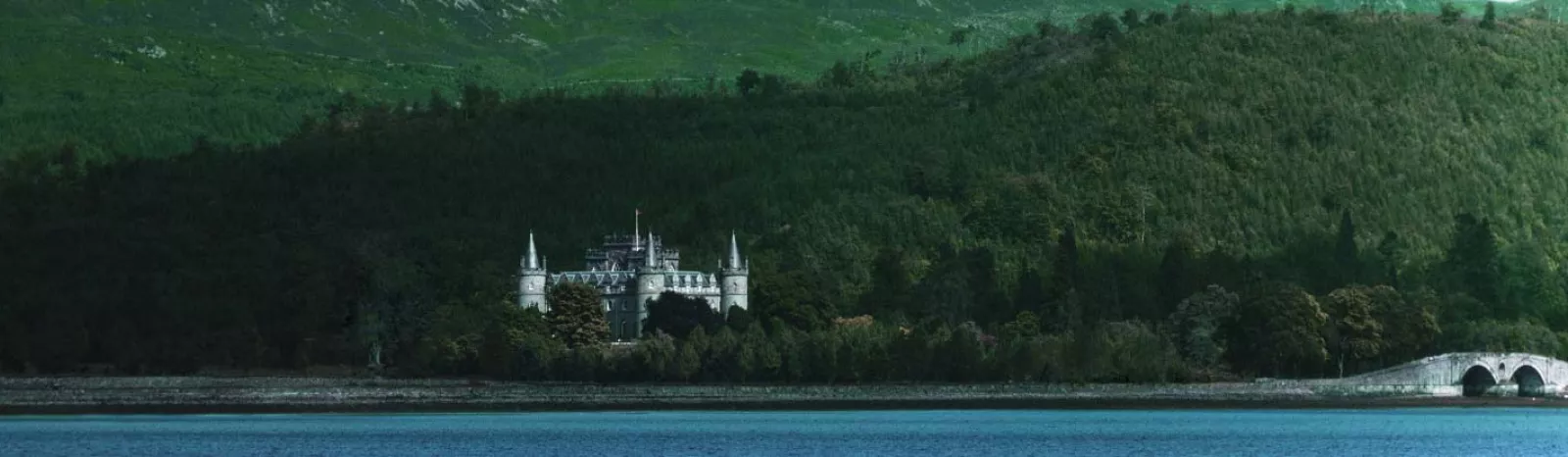
The strength of Clan Campbell has never rested solely with its Chiefs. For more than seven centuries, younger sons of the House of Argyll established cadet houses that became the guardians of Campbell influence throughout Argyll and the Highlands. These families built castles, governed estates, commanded troops, served the Crown, and preserved the traditions of the clan across generations.
Many of these houses remain closely associated with the lands from which they take their names. Together, they tell the story of a clan whose influence extended far beyond its principal seat at Inveraray.
Whether descended directly from the Chiefs of Clan Campbell or from other distinguished Campbell houses, each cadet branch has contributed to the remarkable legacy of the clan.
Senior Cadet House
Campbell of Lochnell
The House of Lochnell is the senior cadet branch of Clan Campbell, descending from John "Ian Gorm" Campbell, second son of Colin Campbell, 3rd Earl of Argyll. For more than four centuries the family has maintained its ancestral seat overlooking Loch Etive.
As the senior surviving cadet line of the House of Argyll, the Campbells of Lochnell are the Heirs Presumptive to the Chiefship of Clan Campbell and the Dukedom of Argyll should the present ducal line become extinct in the male line. This unique position gives Lochnell a special place within the history and succession of Clan Campbell.
Principal Cadet Houses
These branches descend from the principal lines of the House of Argyll and served as important territorial families throughout western Scotland.
Campbell of Ardkinglas
Lords of an extensive estate on Loch Fyne, the Campbells of Ardkinglas became one of Argyll's foremost landed families. Their estate remains renowned for its historic house, woodland gardens, and centuries of stewardship.
Campbell of Auchinbreck
One of the oldest and most distinguished military branches of Clan Campbell, the Campbells of Auchinbreck produced generations of soldiers, officers, and loyal supporters of the Chiefs of Argyll.
Campbell of Craignish
Holding extensive lands on the Craignish Peninsula, this branch helped extend Campbell influence throughout western Argyll while maintaining one of the clan's oldest territorial lordships.
Campbell of Dunstaffnage
Associated with the ancient royal district surrounding Dunstaffnage Castle, this family occupied one of the most strategically significant regions in medieval Argyll.
Campbell of Duntroon
Centered near Loch Crinan, the Campbells of Duntroon played an important role in the military and civic life of Argyll while maintaining close ties to the Chiefs of Clan Campbell.
Campbell of Inverawe
Perhaps best known for the legendary Ghost of Inverawe, this branch also produced distinguished soldiers and loyal Highland lairds whose history combines documented service with enduring Highland tradition.
Campbell of Strachur
Located at the head of Loch Fyne, the House of Strachur has remained one of the best-known Campbell families for centuries and continues to preserve its historic connection to the clan's ancestral homeland.
Historic Cadet Houses
These branches contributed significantly to the expansion and influence of Clan Campbell while developing their own distinctive histories and estates.
Campbell of Airds
Established along the shores of Loch Linnhe, the Campbells of Airds became respected Highland lairds whose influence extended throughout northern Argyll.
Campbell of Caenmore & Melfort
Descended from an important branch of the House of Argyll, the Campbells of Caenmore and Melfort served the Crown in military, political, and administrative roles while managing substantial estates in Argyll.
A Legacy Beyond the Chief
The cadet houses of Clan Campbell demonstrate how one Highland family became one of Scotland's greatest dynasties. While the Dukes of Argyll served as Chiefs of the Clan, these branches extended Campbell leadership into every corner of the Highlands through military service, estate management, public office, and community leadership.
Many of their castles, tower houses, and ancestral estates still stand today, preserving a living connection to more than seven centuries of Campbell history. Together, these houses continue to embody the enduring heritage, traditions, and values of Clan Campbell.
Explore each house to discover its lineage, historic estates, notable lairds, and contribution to the remarkable story of Clan Campbell.
Read more about the: