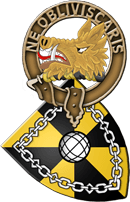
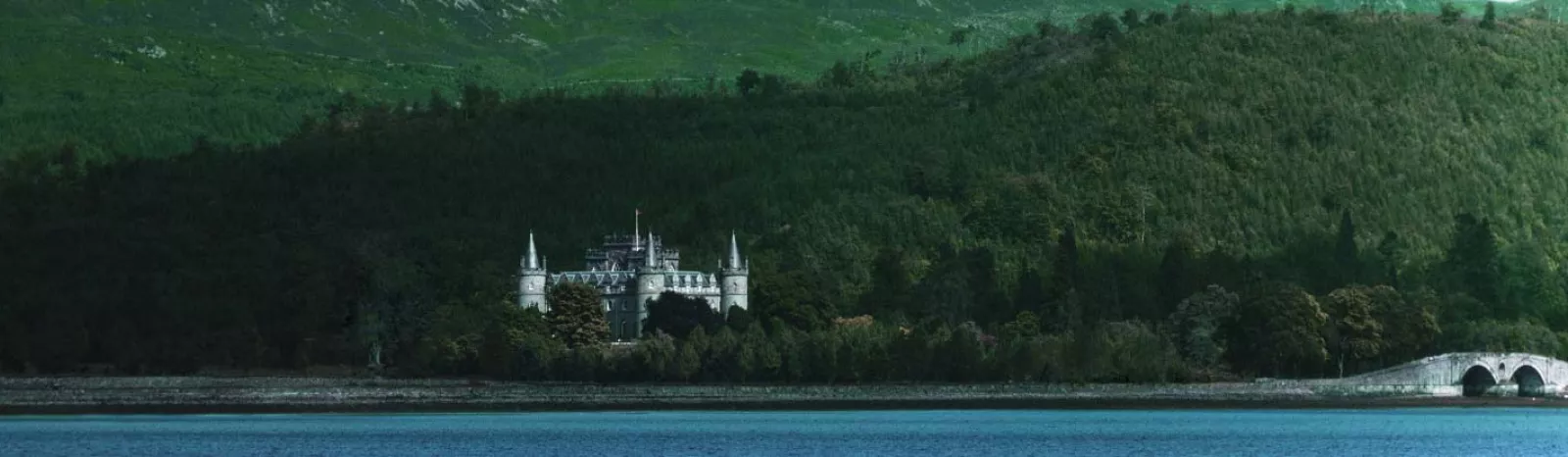
The Earl Cawdor (Scottish Gaelic: Iarla Chawdor) is a historic and highly distinguished title in the Peerage of the United Kingdom, representing one of the major noble cadet lines of the House of Campbell.
While the title itself was created in the 19th century, the family's presence at Cawdor Castle in Nairnshire dates back to a historic 16th-century alliance that merged the ancient Thanes of Calder with the growing power of the Campbells of Argyll. Over the centuries, the Campbells of Cawdor established themselves as influential landowners, statesmen, and military leaders in both the Highlands and Wales.
History
The origin of the Cawdor line is one of the most famous romances—and strategic political maneuvers—in Scottish clan history. The lands of Cawdor were originally held by the ancient family of Calder (the historical spelling of Cawdor), who served as Thanes of Calder. In 1498, William, the 8th Thane, died without a male heir, leaving his infant granddaughter, Muriel Calder, as the sole heiress to the vast thanedom.
Recognizing an opportunity to expand Campbell influence into the northeast of Scotland, Archibald Campbell, 2nd Earl of Argyll, was appointed Muriel's legal guardian by King James IV. In 1499, Argyll sent a party of clansmen to transport the child back to Inveraray. During the journey, they were pursued by Muriel's uncles, who sought to prevent the estate from passing out of the family name. A fierce skirmish ensued, but Muriel was successfully brought to Argyll, where she was raised alongside the Earl's children.
In 1510, Muriel was married to the Earl’s second son, Sir John Campbell (d. 1546), officially establishing the line of the Campbells of Cawdor. Sir John was an ambitious leader who consolidated his hold over the Nairnshire lands and expanded the family's holdings into Argyllshire, notably acquiring the Island of Islay.
By the late 17th century, the family’s political focus expanded southward. Through the marriage of Sir Alexander Campbell, Only Son of the 13th Thane, to Elizabeth Lort, a wealthy Welsh heiress, the family acquired extensive estates in Pembrokeshire and Carmarthenshire, Wales.
In 1796, their descendant John Campbell was elevated to the Peerage of Great Britain as Baron Cawdor of Castlemartin in the County of Pembroke. His son, John Frederick Campbell, played a prominent role in British politics and served as a Member of Parliament. On October 5, 1827, King George IV further elevated him to Earl Cawdor of Castlemartin and Viscount Emlyn of Emlyn in the Peerage of the United Kingdom.
Today, the title continues in a direct, unbroken line of descent. The family maintains an active presence in Scotland and Wales, with the historic 14th-century Cawdor Castle remaining a proud symbol of their enduring legacy.
Peerage Ranks and Precedence
The Earls Cawdor hold high status within the peerage of the United Kingdom. While the Campbell Chiefs hold the premier Scottish and UK ducal titles, the Cawdor line represents a senior branch that has consistently contributed to the administrative and military leadership of Great Britain.
In the United Kingdom Peerage, precedence among Earls is determined strictly by the date of creation. The 1827 creation places the Earl Cawdor among the established senior peerages of the 19th century.
The Full Style of the Earl Cawdor:
The Right Honourable Colin Robert Vaughan Campbell, Earl Cawdor of Castlemartin in the County of Pembroke, Viscount Emlyn of Emlyn in the County of Carmarthen, and Baron Cawdor of Castlemartin; Chief of the House of Campbell of Cawdor.
The Earl Cawdor's Titles and Offices
The family held multiple titles and responsibilities spanning both their ancestral Scottish holdings and their significant estates in Wales.
| Historical Titles Include | Hereditary, Regional, & State Offices Include |
|---|---|
| Thane of Calder (Cawdor) – By historic inheritance from 1510 | Chief of the House of Campbell of Cawdor |
| Baron Cawdor (Great Britain) – 21 Jun 1796 | Lord Lieutenant of Carmarthenshire (Held by multiple Earls) |
| Viscount Emlyn (United Kingdom) – 5 Oct 1827 | Trustee of the British Museum (Held by the 1st Earl) |
| Earl Cawdor (United Kingdom) – 5 Oct 1827 | First Lord of the Admiralty (Held by the 3rd Earl) |
| Provost of Nairn (Historically held within the family) |
Courtesy Titles for the Heirs of the Earl Cawdor
In accordance with British peerage custom, the eldest son and heir apparent of an Earl uses a lesser title held by his father as a courtesy style to distinguish him before inheriting the substantive peerage.
The traditional progression within the House of Cawdor is as follows:
Earl Cawdor └── Viscount Emlyn
- The Heir Apparent: The eldest son and heir apparent to the earldom is traditionally styled Viscount Emlyn.
- The Heir Apparent's Heir: If the Viscount Emlyn has an eldest son during his father's lifetime, that grandson is traditionally styled as a courtesy lord using the family surname or a lesser territorial designation.
Lineage of Title Holders (Selected Chronology)
John Campbell, 1st Baron Cawdor (1753–1821)
- Parentage: Eldest son of Pryse Campbell of Cawdor and Sarah Bacon.
- Marriage: 1789 – Lady Isabella Caroline Howard, daughter of the 5th Earl of Carlisle.
- Significance: An accomplished art collector and politician. He is most famously remembered for commanding the local militia and civilian forces that successfully repelled the French "Black Legion" at Fishguard in 1797 during the last invasion of mainland Britain. Created Baron Cawdor in 1796.
John Frederick Campbell, 1st Earl Cawdor (1790–1860)
- Parentage: Son of the 1st Baron Cawdor and Lady Isabella Howard.
- Marriage: 1816 – Lady Elizabeth Thynne, daughter of the 2nd Marquess of Bath.
- Significance: Educated at Eton and Oxford, he served as a Member of Parliament for Carmarthen. He was a Fellow of the Royal Society and a prominent patron of the arts. Elevated to the rank of Earl Cawdor and Viscount Emlyn in 1827.
John Frederick Vaughan Campbell, 2nd Earl Cawdor (1817–1898)
- Parentage: Eldest son of the 1st Earl and Lady Elizabeth Thynne.
- Marriage: 1842 – Sarah Mary Cavendish, daughter of General the Hon. Henry Frederick Compton Cavendish.
- Significance: Served as Member of Parliament for Pembrokeshire and was appointed Lord Lieutenant of Carmarthenshire, a position he held for over three decades.
Hugh John Vaughan Campbell, 3rd Earl Cawdor (1870–1911)
- Parentage: Son of the 2nd Earl and Sarah Mary Cavendish.
- Marriage: 1898 – Joan Emily Mary Thynne.
- Significance: A distinguished naval administrator and politician who served as First Lord of the Admiralty in 1905. He also served as Chairman of the Great Western Railway.
Colin Robert Vaughan Campbell, 7th Earl Cawdor (b. 1962)
- Parentage: Son of Hugh John Vaughan Campbell, 6th Earl Cawdor, and Cathryn Hinde.
- Marriage: 1994 – Lady Isabella Stanhope, daughter of the 11th Earl of Harrington.
- Key Children:
- Lady Jean Campbell
- James Chester Campbell, Viscount Emlyn (b. 1998, Heir Apparent)
- Significance: The current peer and Chief of the House of Campbell of Cawdor. He is an architect and sustainability advocate, overseeing the historic Cawdor estates.
Current Line of Succession
The succession to the Earldom of Cawdor (and its subsidiary titles, the Viscountcy of Emlyn and Barony of Cawdor) is strictly governed by the rules of male primogeniture under the original patents of creation in the Peerage of Great Britain (1796) and the Peerage of the United Kingdom (1827).
The titles are limited to the heirs male of the body lawfully begotten of the original grantees. Should the current direct line fail, daughters cannot inherit the titles, and the succession must trace backward to the closest collateral male branch.
1. The Immediate Line of the 7th Earl
The current line is stable in the immediate generation. The 7th Earl, Colin Robert Vaughan Campbell, has an eldest son who holds the courtesy title:
- James Chester Campbell, Viscount Emlyn (born 1998) – Heir Apparent.
Because the 7th Earl has no other sons (only three daughters: Lady Jean, Lady Eleanor, and Lady Beatrice) and no brothers, the continuity of this exact branch relies entirely on Viscount Emlyn producing a male heir.
2. If Viscount Emlyn’s Line Fails
If Viscount Emlyn does not produce a male heir and this direct branch becomes extinct, the succession must ascend the family tree to locate the nearest surviving male-line descendants of previous Earls:
Step A: The 6th Earl's Line (Extinct)
The 7th Earl’s father, Hugh John Vaughan Campbell (the 6th Earl), had a younger son, James (the 7th Earl's half-brother, who famously inherited the management of the physical Cawdor Castle estate under the 6th Earl's highly unconventional will). However, because James passed away without male issue, there are no remaining collateral male lines descending from the 6th Earl.
Step B: Tracing to the 5th Earl’s Branch
The search moves further up to the younger sons of John Duncan Vaughan Campbell, the 5th Earl Cawdor (1900–1970).
- The 5th Earl's younger son was the Hon. James Alexander Campbell (1942–2019).
- His surviving male descendants—beginning with his son, Colin Hugh Campbell (born 1977), and any subsequent sons—stand as the next senior collateral line. They would be summoned to succeed to the Earldom should the 7th Earl’s direct line expire.
3. The Ultimate Extinction Horizon
If all male-line descendants of the 1st Earl Cawdor (created 1827) were to completely fail, the peerage titles would face a bifurcated fate:
- The Earldom of Cawdor and the Viscountcy of Emlyn would become extinct. These 1827 titles are strictly bound to the direct male descendants of the 1st Earl.
- The Barony of Cawdor (created 1796) might endure. The older barony could theoretically pass to any surviving male-line descendants of the 1st Baron's younger brother, Rear-Admiral Sir George Campbell, if any exist. If none exist, the barony becomes extinct as well.