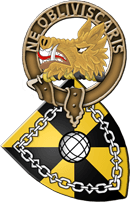

The Apostle, the Saltire and the enduring spirit of Scotland
Saint Andrew, and St. Andrew's Day on November 30th, holds a special place in the history, faith and identity of Scotland. As the country's patron saint, his name and symbol have become inseparable from Scotland's national story. For Scots throughout the world, including members of the Clan Campbell Society, Saint Andrew represents an enduring connection to Scotland, its traditions and its proud heritage.
Who Was Saint Andrew?
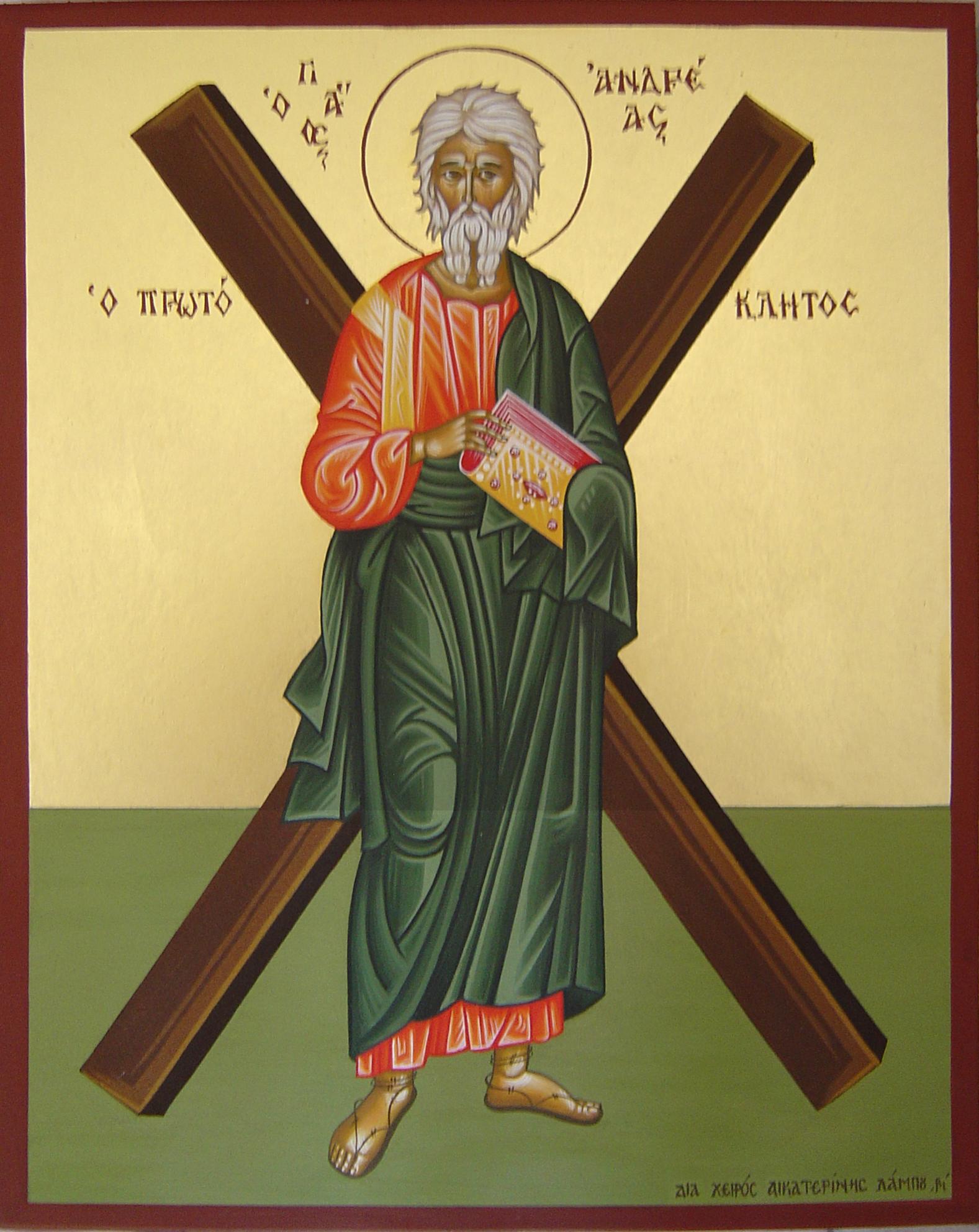
Andrew was one of the twelve apostles of Jesus Christ and, according to the Gospels, one of the first disciples called by Christ. A fisherman from Galilee, he was the brother of Simon Peter.
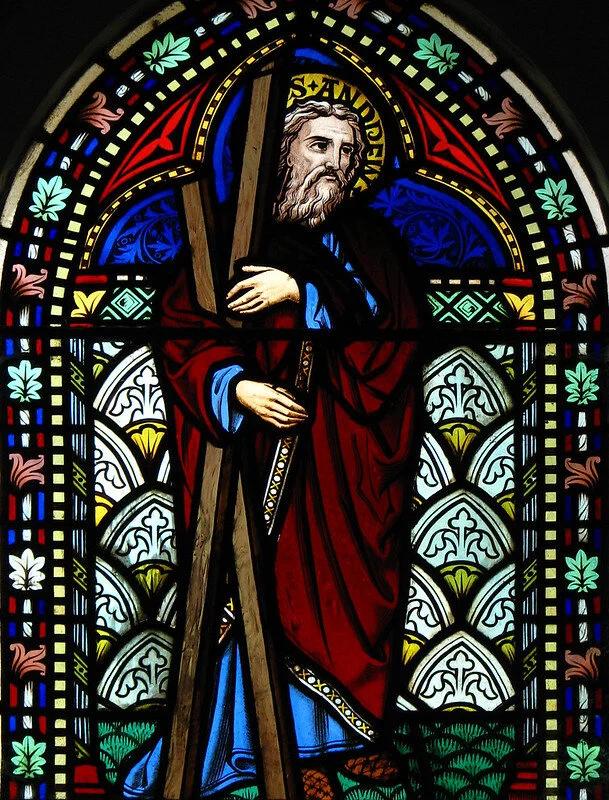
Christian tradition holds that Andrew traveled widely preaching the Gospel. He eventually suffered martyrdom at Patras in Greece, where he was crucified upon a diagonal, X-shaped cross. Tradition relates that he considered himself unworthy to die upon a cross of the same shape as that upon which Christ had been crucified.
This distinctive cross became known as the Cross of Saint Andrew, or the Saltire.
How Saint Andrew Became Scotland's Patron Saint
Although Saint Andrew never visited Scotland according to historical evidence, his association with the country reaches back many centuries.
One longstanding Scottish tradition tells of a Greek monk, Saint Regulus (also known as Saint Rule), who brought relics of Saint Andrew to the east coast of Scotland. These were said to have been deposited at the place that eventually became known as St Andrews, in Fife.
Another famous legend tells of King Óengus of the Picts, who, before a battle against the Angles, witnessed a white cross appearing in the blue sky. Taking this as a sign of divine protection through Saint Andrew, he promised that the saint would become the protector of his people if victory followed.
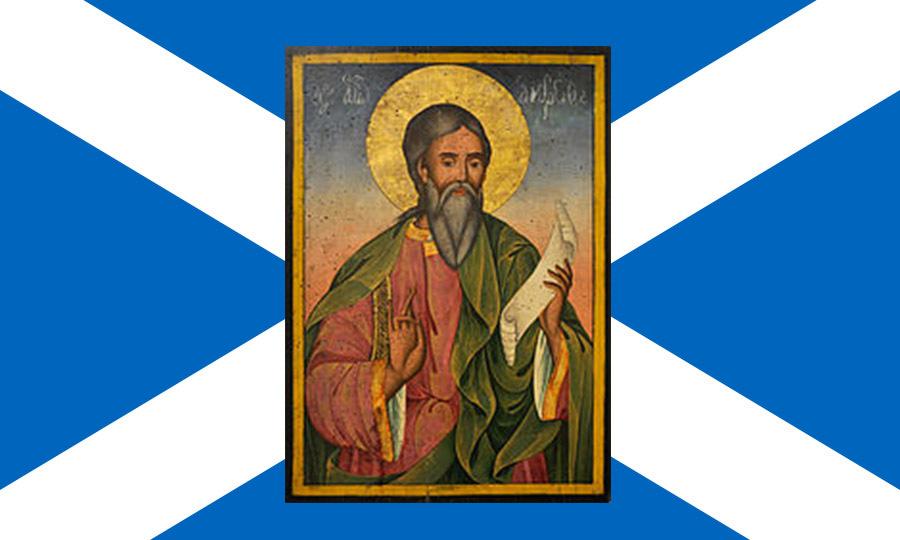
The Picts were victorious, and the diagonal white cross upon a blue background became associated with Saint Andrew and Scotland.
These accounts belong to Scotland's traditional history and national legend, and they have helped shape the country's identity for generations.
The Saltire – Scotland's National Flag
The Saltire, the white diagonal cross upon a blue field, is one of the world's most recognizable national flags.

Its design recalls the traditional account of Saint Andrew's martyrdom and his special relationship with Scotland. It has become a powerful symbol of Scottish nationhood, independence, heritage and pride.
The Saltire is especially meaningful to Scots living abroad. Wherever it is flown, it serves as a reminder of ancestral homeland, family history and the traditions passed down through generations.
For members of the Clan Campbell Society, the Saltire provides a familiar and enduring emblem of the Scottish heritage we share.
Saint Andrew's Day – Every November 30th
Each year on November 30th, Scots at home and throughout the worldwide Scottish diaspora celebrate Saint Andrew's Day.
It is a time to recognize Scotland's history, culture and traditions. Celebrations often include traditional Scottish music, Highland dancing, poetry, Scottish food and the wearing of tartan.
For those whose families emigrated from Scotland many generations ago, the day offers an opportunity to remember their ancestors and celebrate the heritage that continues to connect families across continents.
A Scottish Heritage Shared Across Generations
Scotland's history is made up of the stories of its people, its ancient families, its clans and its communities. The traditions surrounding Saint Andrew remind us that national identity is more than a flag or a name. It is a shared inheritance of history, culture, faith and belonging.
The Clan Campbell Society is proud to recognize the traditions and symbols that have helped define Scotland through the centuries.
As we remember Saint Andrew, we also celebrate the enduring spirit of Scotland and the generations of Scots, including the Campbells, who have carried their heritage across the world.
How St Andrew's Day Is Celebrated in Scotland
Across Scotland, November 30th is an occasion to celebrate the country's patron saint and the distinctive culture, traditions and history of the Scottish people.
Although celebrations vary from community to community, the day is commonly marked by music, dancing, food, fellowship and the display of the Saltire.
Some of the most familiar traditions include:
Ceilidh Dancing and Traditional Music
Ceilidhs are an important part of Scottish social life. Families, friends and communities gather to enjoy traditional Scottish country dancing, accompanied by fiddles, accordions, pipes and other traditional instruments. Experienced callers help everyone join in, making the dances enjoyable for newcomers as well as seasoned dancers.
The Sound of the Bagpipes
Few things evoke Scotland quite like the sound of the Great Highland Bagpipe. Pipe bands and individual pipers frequently provide music at St Andrew's Day gatherings, parades and civic celebrations.
A Traditional Scottish Table
Food is central to the festivities. Traditional favorites include haggis, neeps and tatties, Cullen skink, Scotch broth, shortbread and cranachan. A gathering may conclude with a toast to Scotland and its people.
The Saltire Flying Proudly
The blue and white flag of Scotland is displayed on public buildings, homes and gathering places. It is a visible reminder of the country's history and the shared identity of Scots everywhere.
Community and Family Celebrations
Schools, churches, local organizations and families often arrange special programmes featuring Scottish songs, poetry, storytelling, Highland dancing and activities introducing younger generations to Scotland's heritage.
In Scotland, St Andrew's Day also marks the beginning of the winter festival season, which continues with Hogmanay and Burns Night.
St Andrew's Day in America – Celebrating Our Scottish Heritage
For Scottish Americans, St Andrew's Day has a particularly meaningful history. In fact, the organized celebration of St Andrew's Day on November 30th has deep roots in America.
One of the earliest and most important Scottish organizations was the St Andrew's Society of Charleston, South Carolina, founded in 1729 by Scottish immigrants. It was established not simply to celebrate Scottish identity, but also to provide charitable assistance to those in need.
The St Andrew's Society of the State of New York followed in 1756. These early societies helped establish a tradition of Scottish fellowship, charitable service and cultural preservation that spread throughout America and eventually influenced celebrations back in Scotland.
Today, Scottish Americans continue this tradition through St Andrew's societies, clan organizations, Scottish heritage associations, pipe bands and Highland Games societies.
For Americans whose ancestors left Scotland generations ago, St Andrew's Day provides an opportunity to reconnect with their ancestral homeland and pass its traditions on to their children and grandchildren.
How Scottish Americans Celebrate
Although celebrations differ from state to state and organization to organization, several traditions are especially popular.
St Andrew's Day Dinners and Banquets
Many Scottish societies organize formal dinners or banquets around November 30th. These gatherings bring together people of Scottish descent and those with an appreciation for Scottish culture.
Guests may wear Highland dress, including kilts and clan tartans. The evening often features Scottish music, traditional food, speeches, toasts and fellowship.
Clan Gatherings and Scottish Societies
For members of Scottish clans, St Andrew's Day offers an excellent opportunity to gather with fellow clansmen and women, share family histories and celebrate the bonds of common ancestry.
Clan societies frequently use such occasions to introduce younger members to their Scottish roots, discuss clan history and recognize the contributions of their ancestors.
Bagpipes, Highland Dancing and Scottish Music
Pipers and pipe bands are a familiar feature of Scottish American celebrations. Highland dancers, Scottish country dancers and traditional musicians help bring the atmosphere and sounds of Scotland to American communities.
Scottish Food and Hospitality
A different continent, same traditions. Many families and societies celebrate with a traditional Scottish meal. Haggis, neeps and tatties, Scotch broth, shortbread and other Scottish favorites may feature on the menu.
Some gatherings also include a traditional Scottish toast, accompanied by a dram of Scotch whisky or another favorite beverage.
Charitable Service and Community Support
An important part of the original St Andrew's Society tradition was helping those less fortunate. Many Scottish organizations continue that spirit through charitable activities, scholarships, educational programs and community assistance.
This tradition of generosity is an important reminder that Scottish heritage is not only about remembering the past, but also about serving our communities today.
The Scottish American Connection
Scottish influence in America reaches back to the earliest days of European settlement and has continued through successive generations of immigrants and their descendants.
Scottish Americans have contributed to the nation's military, government, education, industry, commerce and cultural life. Their Scottish ancestry remains an important part of many American family histories.
St Andrew's Day provides a special opportunity to recognize that connection. Whether someone is a first-generation Scottish immigrant, a descendant of Highland ancestors who arrived centuries ago, or simply someone who has embraced Scottish culture, the day offers a reason to celebrate.
The blue and white Saltire flying alongside the Stars and Stripes is a particularly fitting symbol of the enduring friendship between Scotland and America.
A Special Tradition for the Clan Campbell Society
For members of the Clan Campbell Society, St Andrew's Day should be more than a date on the calendar. It is an opportunity to celebrate the heritage we share as Scots and descendants of Scots.
Campbells throughout Scotland, America and the wider world have carried their family histories, traditions and pride in their Scottish ancestry across generations.
We encourage members and their families to mark November 30th in whatever way is meaningful to them:
- Display the Saltire and, where appropriate, the Campbell clan crest or tartan.
- Attend a local St Andrew's Day dinner or Scottish society gathering.
- Share stories of Campbell ancestors and their journeys from Scotland.
- Introduce children and grandchildren to Scottish music, history and traditions.
- Support Scottish charitable and cultural organizations.
- Raise a glass in honor of Scotland, its people and the generations who came before us.
Above all, St Andrew's Day reminds us that although distance and generations may separate us from our ancestral homeland, our Scottish heritage remains a living connection.
Wherever a Campbell may call home, Scotland is never far from the heart.
Alba gu Bràth – Scotland Forever!