
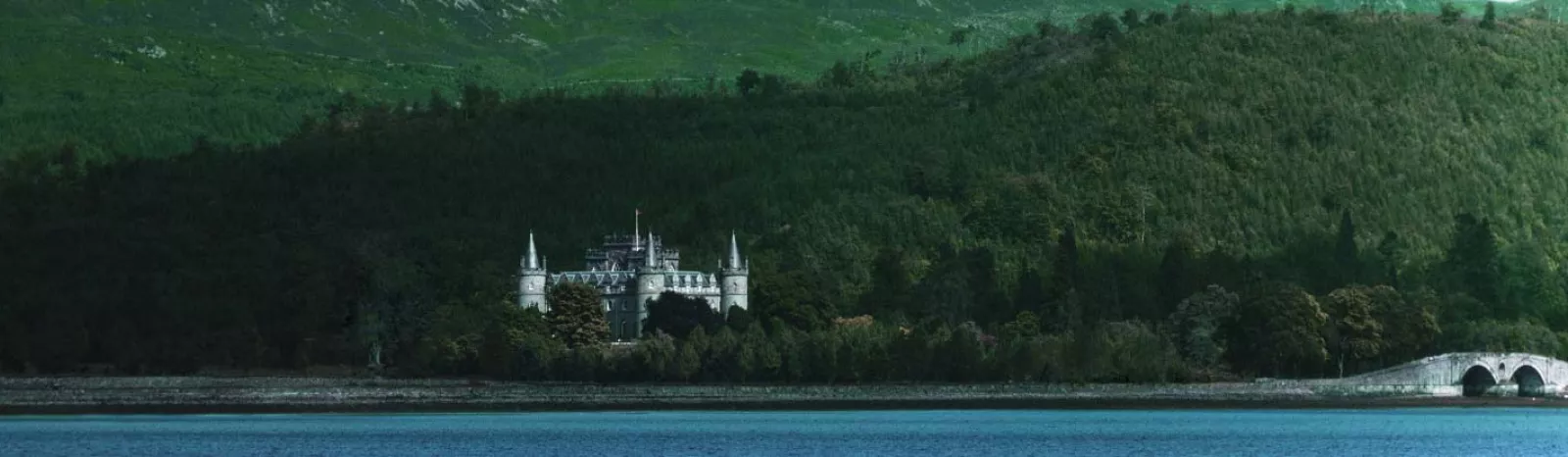
The Campbell Earl of Breadalbane and Holland (Scottish Gaelic: Iarla Bhràghaid Alban) is a historic title created by Letters Patent in the Peerage of Scotland on August 13, 1681, for Sir John Campbell, 5th Baronet of Glenorchy. As the preeminent cadet branch of Clan Campbell, the Earls, and later Marquesses, of Breadalbane amassed vast territories stretching across the southern Highlands from Aberfeldy to the Atlantic coast, making them for centuries one of the most powerful and influential noble families in Scotland and the United Kingdom.
History
The lineage of the Breadalbane branch began with Sir Colin Campbell, 1st of Glenorchy (c. 1406–1475), a younger son of Sir Duncan Campbell, 1st Lord Campbell of Lochow, and his wife Lady Margaret Stewart. Sir Colin was granted the lands of Glenorchy by his father and established the seat of the family at Kilchurn Castle on Loch Awe. Through strategic marriages, political acumen, and aggressive territorial expansion, his descendants—known as the Campbells of Glenorchy—rapidly expanded their influence eastward into Breadalbane, Perthshire, and Tayside.
By the 17th century, the family held immense political power. Sir John Campbell, 5th Baronet of Glenorchy (1635–1717), known as "Slippery John," was a prominent politician and financier. In 1672, he claimed the title of Earl of Caithness through a complex web of debts owed to him by George Sinclair, the 6th Earl of Caithness. Following Sinclair's death, Campbell was created Earl of Caithness in 1677. However, the Sinclair heir-male successfully challenged the claim in parliament, forcing a resolution.
On August 13, 1681, King Charles II granted Sir John a new patent creating him Earl of Breadalbane and Holland, Viscount of Tay and Paintland, Lord Glenorchy, Benederaloch, Ormelie and Weick in the Peerage of Scotland, with the precedence of his original 1677 creation.
The 1st Earl later played a critical and controversial role in Highland politics, acting as the crown's chief negotiator during the pacification of the Highland clans, an effort that ultimately culminated in the tragic Glencoe Massacre of 1692.
In 1831, John Campbell, 4th Earl of Breadalbane, was further elevated to Marquess of Breadalbane and Earl of Ormelie in the Peerage of the United Kingdom. These titles became extinct upon the death of the 2nd Marquess in 1862 without direct male issue, but the Scottish earldom passed to a distant cousin, Gavin Campbell, who was himself created Marquess of Breadalbane (second creation) in 1885. This second marquessate became extinct in 1922. The earldom continued through successive heirs until 1995, when the 10th Earl of Breadalbane passed away without a male heir, leaving the title currently dormant.
Multiple Peerage Ranks and Precedence
The Earls of Breadalbane held high status within the Scottish nobility, often sitting as Scottish Representative Peers in the British House of Lords after the Act of Union. At the height of their influence in the 19th and early 20th centuries, the family held both their historic Scottish titles and United Kingdom marquessates.
In the Scottish Peerage, the Order of Precedence for Earls is based strictly on the date of creation. The original patent granted to the 1st Earl of Breadalbane carried the precedence of his June 28, 1677, creation as Earl of Caithness, placing the title securely among the senior earldoms of Scotland.
The Full Historical Style of the Earl of Breadalbane:
The Right Honourable the Earl of Breadalbane and Holland, Viscount of Tay and Paintland, Lord Glenorchy, Benederaloch, Ormelie and Weick in the Peerage of Scotland; Baron Breadalbane of Taymouth Castle in the Peerage of the United Kingdom; a Baronet of Nova Scotia; and Chief of the House of Campbell of Glenorchy.
The Earl of Breadalbane's Titles and Offices
The family held a vast array of titles, lands, and hereditary responsibilities across western and central Scotland, centered primarily on their primary seat at Taymouth Castle.
| Historical Titles Include | Hereditary & Regional Offices Include |
|---|---|
| Baronet of Glenorchy (Nova Scotia) – 29 May 1625 | Chief of the House of Campbell of Glenorchy |
| Earl of Breadalbane and Holland (Scotland) – 13 Aug 1681 | Keeper of Kilchurn Castle (Loch Awe) |
| Viscount of Tay and Paintland (Scotland) – 13 Aug 1681 | Keeper of Finlarig Castle (Killin) |
| Lord Glenorchy, Benederaloch, Ormelie and Weick (Scotland) – 13 Aug 1681 | Lord Lieutenant of Argyllshire (Held by the 2nd Marquess) |
| Baron Breadalbane, of Taymouth Castle (UK) – 1806 | Governor of the Bank of Scotland (Held by the 1st Marquess) |
| Marquess of Breadalbane (UK) – 12 Sep 1831 (Extinct 1862) | Lord Chamberlain of the Household (Held by the 2nd Marquess) |
| Earl of Ormelie (UK) – 12 Sep 1831 (Extinct 1862) | Lord High Commissioner to the General Assembly of the Church of Scotland (Held by the 3rd Marquess) |
| Marquess of Breadalbane (UK) – 11 Jul 1885 (Extinct 1922) | Colonel of the 5th Volunteer Battalion, Royal Highlanders |
Courtesy Titles for the Heirs of the Earl of Breadalbane
In the British peerage system, the eldest son and heir apparent of an Earl uses a lesser title held by his father as a courtesy style. When the family held the higher rank of Marquess, three generations of courtesy titles were utilized.
The traditional progression from father to great-grandson within the House of Breadalbane was as follows:
Marquess of Breadalbane └── Earl of Ormelie └── Viscount of Tay └── Lord Glenorchy
- During the Marquessate: The heir apparent was styled the Earl of Ormelie, and his eldest son was styled Viscount of Tay.
- During the Earldom: The heir apparent to the earldom was traditionally styled Lord Glenorchy.
Lineage of the Earls of Breadalbane and Holland
Since the Earldom passed through two distinct branches of the Glenorchy Campbells, it's helpful to show both the direct father-to-son descent and where the succession shifted to the cadet line after the extinction of the 3rd Earl's male line.
Sir Robert Campbell, 3rd Baronet of Glenorchy
│
├── Sir John Campbell, 4th Baronet of Glenorchy
│ │
│ └── John Campbell, 1st Earl of Breadalbane and Holland (1636–1717)
│ │
│ ├── Duncan Campbell, Lord Ormelie
│ │ (passed over; mentally incapacitated)
│ │
│ └── John Campbell, 2nd Earl (1662–1752)
│ │
│ └── John Campbell, 3rd Earl (1696–1782)
│ │
│ ├── Henry Campbell (died young)
│ ├── George Campbell (died young)
│ └── John Campbell, Lord Glenorchy (1738–1771)
│ │
│ └── No surviving issue
│
└── Colin Campbell of Mochaster
│
└── Colin Campbell of Carwhin
│
└── John Campbell,
4th Earl of Breadalbane
1st Marquess of Breadalbane
(1762–1834)
│
└── John Campbell,
5th Earl
2nd Marquess
(1796–1862)
│
└── No issue
Succession transferred to the Glenfalloch branch.
Campbell of Glenfalloch
│
└── Major-General William John Lamb Campbell
│
└── John Alexander Gavin Campbell
6th Earl (1821–1871)
│
├── Gavin Campbell
│ 7th Earl
│ 1st Marquess (2nd Creation)
│ (1851–1922)
│ │
│ └── No issue
│
└── Captain the Hon. Ivan Campbell
(1859–1917)
│
├── Iain Edward Herbert Campbell
│ 8th Earl
│ (1885–1923)
│ │
│ └── No issue
│
└── Charles William Campbell
9th Earl
(1886–1959)
│
└── John Romer Boreland Campbell
10th Earl
(1919–1995)
│
└── No issue
Line of Succession
1st Earl
│
2nd Earl
│
3rd Earl
│
└── Male line extinct (1782)
│
▼
4th Earl (heir male from the Carwhin branch)
│
5th Earl
│
└── No issue (1862)
│
▼
6th Earl (heir male from the Glenfalloch branch)
│
7th Earl
│
8th Earl
│
9th Earl
│
10th Earl
│
└── Earldom dormant since 1995
This chart illustrates the three distinct phases of the title's descent:
The original Breadalbane line (1st–3rd Earls).
The Carwhin branch (4th–5th Earls), descended from Sir Robert Campbell's younger son Colin of Mochaster.
The Glenfalloch branch (6th–10th Earls), another cadet line of the Glenorchy Campbells that inherited as heirs male after the extinction of the senior male lines.
From a genealogical perspective, this demonstrates that while the earldom remained within the Glenorchy Campbells, it passed through three separate agnatic (male-line) branches over the course of more than three centuries.
Sir John Campbell, 1st Earl of Breadalbane and Holland (1635–1717)
- Parentage: Son of Sir John Campbell, 4th Baronet of Glenorchy, and Lady Mary Graham, daughter of the Earl of Airth and Menteith.
- Marriages: Married three times.
- 1st Wife: Lady Mary Rich (d. 1666), daughter of the 1st Earl of Holland.
- Issue: Produced two sons: Duncan Campbell (Lord Ormelie, passed over due to incapacity) and John Campbell (2nd Earl).
- 2nd Wife: Lady Mary Campbell (d. 1691), Dowager Countess of Caithness & daughter of the 1st Marquess of Argyll (m. 1678).
- Issue: No surviving issue.
- 3rd Wife: Mrs. Mildred Littler (m. later in life).
- Issue: No male/surviving issue (Note: Some older peerage records attribute a daughter, Mary, to his later line/connections, but no surviving issue came from the second marriage).
- Significance: Created Earl of Breadalbane and Holland in 1681. Known as one of the most influential Highland magnates of his age, he negotiated the pacification of the Highland clans at Achallader following the Glencoe Massacre and expanded the Breadalbane estates to their greatest historical extent.
Born: 26 July 1636
Died: 19 March 1717
Tenure: 13 Aug 1681 – 19 Mar 1717 (35 years, 7 months, 6 days)
John Campbell, 2nd Earl of Breadalbane and Holland (1662–1752)
- Parentage: Second son of the 1st Earl and Lady Mary Rich.
- Marriages: Married twice.
- 1st Wife: Lady Frances Cavendish (1660–1690), daughter of the 2nd Duke of Newcastle.
- Issue: No issue.
- 2nd Wife: Henrietta Villiers (d. 1720), daughter of Sir Edward Villiers (m. 1695).
- Issue: Produced all of his issue, including John Campbell (3rd Earl) and two daughters (Lady Henrietta and Lady Caroline/Charlotte).
- Significance: Served as Lord Lieutenant of Perthshire and as a Scottish Representative Peer. Successfully preserved the family fortunes following the 1715 Jacobite Rising despite suspicions surrounding his father's political sympathies.
Born: 1662
Died: 23 February 1752
Tenure: 19 Mar 1717 – 23 Feb 1752 (34 years, 11 months, 4 days)
John Campbell, 3rd Earl of Breadalbane and Holland (1696–1782)
- Parentage: Eldest surviving son of the 2nd Earl and Henrietta Villiers.
- Marriages: Married twice—and had issue with both wives.
- 1st Wife: Lady Amabel Grey (d. 1726), daughter of the 1st Duke of Kent (m. 1718).
- Issue: 2 children—Henry Campbell (died young in 1727) and Jemima Campbell (who inherited her grandfather's title as suo jure 2nd Marchioness Grey).
- 2nd Wife: Arabella Pershall (d. 1762), daughter of John Pershall (m. 1730).
- Issue: 2 sons—George Campbell (died young) and John Campbell, Lord Glenorchy (1738–1771).
- Crucial Peerage Twist: Lord Glenorchy (his son by the 2nd wife) married Willielma Maxwell but died in 1771 without issue, predeceasing his father. Because the 3rd Earl outlived all his sons from both marriages, his direct line failed on his death in 1782, causing the Earldom to jump to his distant cousin, Colin Campbell of Carwhin’s son (who became the 4th Earl).
- Significance: Served as a Scottish Representative Peer and maintained the extensive Breadalbane estates during a period of relative stability following the Jacobite risings. Having no surviving legitimate male heir, the earldom passed to his distant kinsman and heir male of the Glenorchy line.
Born: 1696
Died: 26 February 1782
Tenure: 23 Feb 1752 – 26 Feb 1782 (30 years, 3 days)
John Campbell, 4th Earl of Breadalbane and Holland, 1st Marquess of Breadalbane (1762–1834)
- Parentage: Son of Colin Campbell of Carwhin, succeeding his distant cousin, the 3rd Earl, as heir male. John Campbell was the son of Colin Campbell of Carwhin by Elizabeth Campbell, daughter of Archibald Campbell, of Stonefield. He was a great-grandson of Colin Campbell of Mochaster, younger son of Sir Robert Campbell, 3rd Baronet, of Glenorchy, and uncle of John Campbell, 1st Earl of Breadalbane and Holland. He was educated at Winchester.
- 1. Lady Elizabeth Maitland Campbell
- Dates: July 27, 1794 – February 17, 1878
- Marriage: Married Sir John Pringle of Stichill, 5th Baronet, on October 19, 1831 (as his second wife).
- Issue: Had issue, including a daughter, Magdalen Breadalbane Pringle.
- 2. Lady Mary Campbell
- Dates: c. 1795 – June 28, 1862
- Marriage: Married Richard Temple-Nugent-Brydges-Chandos-Grenville (then Marquess of Chandos, later 2nd Duke of Buckingham and Chandos) on May 13, 1819.
- Issue: Had two children:
- Lady Anna Eliza Mary Grenville (a notable campaigner for women's rights).
- Richard, 3rd Duke of Buckingham and Chandos.
- Note: She obtained a high-profile divorce by Act of Parliament in 1850 following her husband's catastrophic bankruptcy and financial ruin.
Born: 10 September 1762
Died: 19 March 1834
Tenure: 26 Feb 1782 – 19 Mar 1834 (52 years, 21 days)
John Campbell, 2nd Marquess & 5th Earl of Breadalbane
- Dates: October 26, 1796 – November 8, 1862
- Titles & Role: Styled as Earl of Ormelie prior to succeeding his father in 1834. Served as a Liberal politician, Lord Chamberlain of the Household, and Knight of the Thistle.
- Marriage: Married Lady Eliza Baillie (daughter of George Baillie of Jerviswoode) in 1821.
- Issue: No issue. Upon his death in 1862, his United Kingdom Marquessate became extinct, while the original Scottish Earldom reverted to his distant cousin, John Alexander Gavin Campbell of Glenfalloch (who became the 6th Earl).
Summary Table
Child Life Dates Spouse / Peerage Connection Issue Lady Elizabeth Maitland Campbell 1794–1878 m. Sir John Pringle of Stichill, 5th Bt. Left issue. Lady Mary Campbell ~1795–1862 m. Richard, 2nd Duke of Buckingham & Chandos Left issue. John Campbell 1796–1862 5th Earl / 2nd Marquess; m. Lady Eliza Baillie - Significance: Lord Breadalbane and Holland raised the Breadalbane Fencibles Regiment, in which he served as a lieutenant-colonel. He became colonel in 1802, a major-general in 1809 and a lieutenant-general in 1814. In 1806 he was created Baron Breadalbane, of Taymouth Castle in the County of Perth, in the Peerage of the United Kingdom, which entitled him to an automatic seat in the House of Lords. In 1831 he was further honored when he was made Earl of Ormelie and Marquess of Breadalbane in the Peerage of the United Kingdom. Rebuilt Taymouth Castle into one of Scotland's finest Gothic Revival country houses.
Born: 26 October 1796
Died: 8 November 1862
Tenure: 19 Mar 1834 – 8 Nov 1862 (28 years, 7 months, 20 days)
John Alexander Gavin Campbell, 6th Earl of Breadalbane and Holland (1821–1871)
- Parentage: Son of Major-General John Campbell, cousin of the 5th Earl and heir male of the Glenorchy family.
- Marriage: 1851 – Lady Elizabeth Baillie, daughter of George Baillie of Jerviswood.
- 1. Gavin Campbell, 7th Earl (and 1st Marquess) of Breadalbane
- Dates: November 9, 1851 – October 19, 1922
- Titles & Role: Succeeded his father as 7th Earl in 1871; later created 1st Marquess of Breadalbane (2nd creation) in 1885. Served as a prominent Liberal politician, Privy Councillor, Knight of the Garter, and Lord Steward of the Household.
- Marriage & Issue: Married Lady Alma Graham (daughter of the 4th Duke of Montrose) in 1872. They had no issue. Upon his death in 1922, the Marquessate became extinct, and the Scottish Earldom passed to his nephew (the son of his brother Ivan).
- 2. Lady Eva Campbell
- Dates: March 4, 1854 – 1913
- Marriage & Issue: Married Cuthbert John Heathcote of Hinton Abbey on May 24, 1876.
- Children:
- Mary Eva Heathcote (b. 1877)
- John Robert Campbell Heathcote (b. 1879), Lieutenant in the 3rd Battalion, Somersetshire Light Infantry
- 3. Captain the Hon. Ivan Campbell
- Dates: May 11, 1859 – March 16, 1917
- Military & Role: Officer in the 79th Cameron Highlanders.
- Marriage & Issue: Married Lady Margaret Elizabeth Diana Agar (daughter of the 3rd Earl of Normanton) in 1884.
- Children:
- Iain Edward Herbert Campbell (1885–1923), who later succeeded his uncle Gavin as the 8th Earl of Breadalbane and Holland in 1922. (The 8th Earl died childless in May 1923, after which the peerage moved to the cadet line of the 9th Earl).
- 4. Hon. Norman Campbell
- Status: Died in infancy (1866).
- Significance: Restored the direct succession of the earldom following the extinction of the first Marquessate and continued the stewardship of the Breadalbane estates.
Born: 30 June 1821
Died: 26 March 1871
Tenure: 8 Nov 1862 – 26 Mar 1871 (8 years, 4 months, 18 days)
Gavin Campbell, 7th Earl of Breadalbane and Holland, 1st Marquess of Breadalbane (2nd Creation) (1851–1922)
- Parentage: Son of John Alexander Gavin Campbell, 6th Earl.
- Marriage: 1872 – Lady Alma Graham, daughter of the 4th Duke of Montrose.
- Key Children:
- No issue.
- Significance: A prominent Liberal politician who served as Lord Steward of the Household. Created Marquess of Breadalbane (second creation) in 1885 and appointed a Knight of the Garter (KG) in 1893. Upon his death without issue, the second Marquessate became extinct while the Scottish earldom passed to his nephew.
Born: 9 November 1851
Died: 19 October 1922
Tenure: 26 Mar 1871 – 19 Oct 1922 (51 years, 6 months, 23 days)
Iain Edward Campbell, 8th Earl of Breadalbane and Holland (1885–1923)
- Parentage: Son of Captain the Hon. Ivan Campbell, younger brother of the 7th Earl.
- Marriage: Never married.
- Key Children: None.
- Significance: Served during the First World War and succeeded his uncle in 1922. Guided the family through the social and economic challenges facing many Highland estates during the early twentieth century.
Born: 30 October 1885
Died: 15 May 1923
Tenure: 19 Oct 1922 – 15 May 1923 (6 months, 26 days)
Charles William Campbell, 9th Earl of Breadalbane and Holland (1886–1959)
- Parentage: Younger brother of the 8th Earl; son of Captain the Hon. Ivan Campbell.
- Marriage: 1918 – Rosamond Esther Hester Gwendolen Dashwood.
- Key Children:
- John Michael Kenneth Campbell, later 10th Earl.
- Significance: Served in the British Army during the First World War and became Earl in 1944. Presided over the family during a period of profound social and economic change affecting Scotland's great landed estates.
Born: 12 September 1886
Died: 5 April 1959
Tenure: 15 May 1923 – 5 Apr 1959 (35 years, 10 months, 21 days)
John Romer Boreland Campbell, 10th Earl of Breadalbane and Holland (1919–1995)
- Parentage: Son of Charles William Campbell, 9th Earl.
- Marriage: Coralie Archer
- Key Children: None.
- Significance: Served with the Black Watch during the Second World War, where he was seriously wounded. Upon his death in 1995 without male heirs, the succession to the Earldom of Breadalbane and Holland became dormant, pending proof of the rightful heir male under the 1681 creation.
Born: 26 December 1919
Died: 19 June 1995
Tenure: 5 Apr 1959 – 19 Jun 1995 (36 years, 2 months, 14 days)
Current Status Summary
- Last Recognized Holder: John Romer Boreland Campbell, 10th Earl of Breadalbane and Holland.
- Dormancy Date: December 15, 1995 (upon the death of the 10th Earl).
- Reason for Dormancy: The 10th Earl died without leaving a direct male heir. While the United Kingdom titles held by earlier marquesses expired/extinct earlier, the original 1681 patent for the Earl of Breadalbane and Holland allows succession by heirs-male whatsoever (collateral male descendants), the title did not die with the 10th Earl in 1995—it simply became unassigned until an heir-male successfully proves his lineage before the Lord Lyon or the Committee for Privileges.
Over the years, three primary figures and cadet lines have emerged in discussions around the claim:
1. Huba András Campbell (The Presumed Senior Heir)
- The Claim: In peerage reference publications (such as Debrett's Peerage), Huba András Campbell (born 1945 in Hungary) has long been cited as the "presumed heir".
- Lineage: He is a direct male-line descendant of Charles Campbell, a cadet relative whose branch produced the 9th Earl (Charles William Campbell) and 10th Earl (John Romer Boreland Campbell).
- Status: While he is widely considered by genealogists to hold the senior legitimate male line, he has never formally petitioned the Lord Lyon King of Arms or the Crown Office to establish his legal claim. Observers attribute this to the immense financial cost, legal complexity, and lack of tangible benefit (such as a seat in the House of Lords or estate lands) associated with proving a Scottish peerage claim today.
2. Sir Lachlan Campbell, 6th Baronet (of Aberuchill)
- The Claim: Sir Lachlan Campbell of Aberuchill (b. 1958) is a senior baronet within the broader Campbell of Glenorchy/Breadalbane ancestral tree.
- Lineage: He descends from the early Glenorchy stock that predates or parallels the 1st Earl’s immediate line.
- Status / Complications: His potential claim to the Earldom faces a major legal barrier under Scots peerage law: an allegation of an illegitimacy (a birth outside of marriage) along a crucial ancestral link in his line. Under Scottish peerage law, an unbroken line of legitimate male-line descent is strictly required.
3. Duncan Campbell of Canna
- The Claim: A lineage deriving from Patrick Campbell of Skiag (a junior Glenorchy cadet branch).
- Status: Named in several genealogical surveys as a potential collateral claimant if senior lines fail or are disqualified, though no formal decree of entitlement has been issued by the Court of the Lord Lyon.
Why the Claim Remains Unresolved
Proving a dormant Scottish peerage requires a petitioner to submit a formal Petition for Remainder / Proving of the Lineage to the Lord Lyon King of Arms or the Standing Council of the Peerage.
The process requires verifying centuries of primary records—birth, marriage, and death certificates, alongside testament retours—proving that every male line senior to the claimant has died out without legitimate male issue. Because the immense Breadalbane landholdings (including Taymouth Castle) were broken up and liquidated throughout the 20th century, there is no physical estate attached to the title, leaving little practical incentive for potential heirs to bear the legal expense of a formal claim.